Kartonsan and the Environment
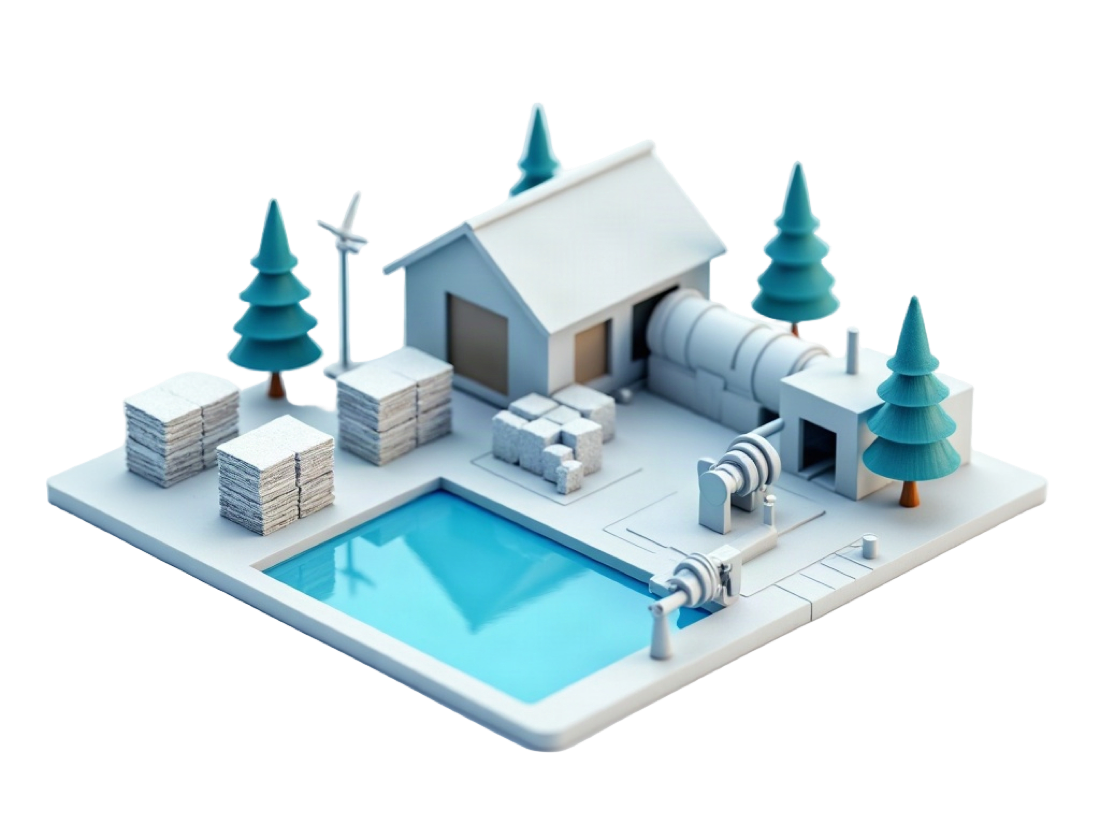
Environmental protection is a cornerstone of all of Kartonsan’s manufacturing and commercial operations.
Climate change remains as big a global threat to the future of humanity as ever. Climate change also poses numerous risks from the standpoint of the coated cardboard industry. Manufacturers who are adept at managing these risks will be able not only to minimize them but also to take advantage of beneficial opportunities such as satisfying the expectations of a wide range of customer profiles.
When this issue is considered with respect to the cardboard industry, the sector has been seen to be taking action and important steps to get under control and to minimize the possible effects of its production on the environment and on climate change. As well as decreasing greenhouse gas emissions, the use of scrap paper as a raw material (instead of cellulose) during the production of cardboard plays a vital role. Coated cardboard producers in developed and developing countries demonstrate systematic efforts on issues such as sustainable forest management, the use of scrap paper and renewable energy.
In practices of cardboard production linked to sustainability, another important actions to consider are to establish close and constructive cooperation between stakeholders, including suppliers; to support international cooperation and global initiatives and to take part in these planned activities.
As a responsible producer and an "exemplary corporate citizen", Kartonsan reveals its responsibility for the environment through

maximizing its use of waste paper in producing processes as much as possible,

generating its own energy and steam,
purifying its wastewater with last technics,

following-up activities to get under control greenhouse gas emissions.
The usage rate of waste paper in Kartonsan is exceeding 95% in producing coated cardboard.
Issues pertaining to the disposal and/or recycling of solid waste in our country are subject to the regulatory mandate of the Ministry of Environment and Urbanization. Having brought its production processes into compliance with the requirements of applicable laws and regulations, Kartonsan also regards the effective disposal and/or recycling of solid waste as an important element of its sustainability approach and it therefore engages in efforts aimed at properly disposing and recycling solid waste not just at the raw material procurements stage but also after its products have been used.
Kartonsan uses more than 95% of wastepaper in its production of coated cardboard.
Greenhouse gas emissions
Within the scope of the environmental legislation in force, Kartonsan carries out measurement and verification of its greenhouse gas emissions annually and completes the related legal declarations.
As of 2024, Kartonsan calculates and reports its carbon footprint covering Scope 1 and Scope 2 emissions. Emission values are presented in the Environmental Performance table. The Company aims to include and publish Scope 3 emission calculations in the coming period.

Kartonsan also holds an Environmental Permit and License awarded by the Ministry of Environment and Urbanization.
Kartonsan aims to increase its energy production and efficiency
Since 1997, Kartonsan has invested in additional cooling and caldron systems for its initiative to generate electricity and steam using a minimum amount of clean natural resources in its cogeneration plant.
In 2025, specific electricity consumption in the board production processes was 443.03 kWh/tonne and specific steam consumption for the process was 1.48 tonnes/tonne. These levels of energy consumption show that Kartonsan is in the class of energy-efficient plants.

Kartonsan recycles 28% of the water it uses.
In 2014, Kartonsan increased the capacity of its wastewater treatment facility to 10,000 m3/day. Within the scope of a new project completed in 2015, Kartonsan started using the MBR system, marking a new initiative in Turkey for the coated cardboard sector.
With this system, an average of 3,200 m3 of wastewater was recycled per day, achieving a reduction in the use of fresh water.
With the improvement and efficiency efforts it began in 2018, Kartonsan reduced the amount of fresh water used across the entire plant to produce one tonne of board from 8.95 m3 (2007–2017 average) to 5.05 m3 in 2025, and has continued its work in this area by implementing the MBR process improvement project.
FSC-CoC® Certification* Initiatives
In line with the FSC-CoC® certification it has held since 2011, Kartonsan continues to fulfill the requirements in regards to using forest resources efficiently and effectively.
Kartonsan has finalized work on the system and processes in line with the new revision on FSC-CoC® Certification published in 2015, after certain reviews. In addition, an evaluation was conducted by BM Trada in 2015 in regard to meeting system requirements. Kartonsan was given approval following the evaluation.
*FSC-CoC® Certification is an international standard used for;
- contributing to the correct management of forest resources in the world,
- defining methods and standards for this,
- ensuring that certified forest products are used with certified and properly managed goods and
- avoiding the use of any uncertified forest products in any phase of the supply chain.